

Nuclear mechanics as a diagnostic and therapeutic target for glioblastoma
Glioblastomas (GBMs) are the most lethal primary brain tumours. The absence of effective therapies is mainly due to tumour invasion and to the resistance of invading cells to treatments such as radio and chemo-therapies. In GBMs, lamin proteins that control nuclear envelope stiffness, have recently emerged as potential markers of aggressiveness and tumourigenicity. Nuclear mechanics has appeared as a key determinant of cancer cell invasion leading us to hypothesize that genes controlling nuclear mechanics of GBM cells may be used as diagnostic tools and potential therapeutic targets to improve the prognostic of GBMs.
The working hypotheses of this M2 internship project is that alterations in nuclear mechanics contribute to GBM aggressiveness and directly influence cell invasive behaviour. The intern will first use clinically annotated primary patient-derived GBM cells and rheological techniques (optical tweezers, microfluidics) to measure nuclear morphology and mechanics (Figure). Second, he/she will modulate the expression levels of lamins to modify both nuclear mechanics and GBM cell invasion and test whether lamins could be used as potential molecular targets to control GBM aggressiveness.
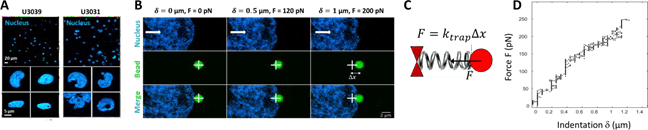
Figure: A. Comparison of the morphology of the nucleus in two different GBM cell lines (U3039 and U 3031). B. Measurements of the viscoelasticity of the nucleus using indentation of GBM nuclei in living cells. A. Images showing a typical nuclear indentation experiment. The white cross represents the centre of the optical tweezers in which the 2 µm- diameter bead is trapped (green). The nucleus (blue) is indented by moving the cell towards the right (white arrow) which displaces the bead away from the trap centre of a distance ∆x. C. Scheme of the bead in the optical trap. D. Force-indentation curve showing the force F as a function of the indentation d in the experiment shown in B.
Key words: nuclear envelope; lamin A/C; lamin B1; lamin B2; LINC complex; optical tweezers; microfluidic; cancer; glioblastoma; cytoskeleton; migration; invasion.
Collaborators: Sandrine Etienne-Manneville (Institut Pasteur, Paris), Catherine Villard (Institut Curie, Paris), Wang Xi (IJM, Paris), Nicolas Borghi (IJM, Paris)
Laboratory: Matière et Systèmes Complexes, UMR 7057 CNRS-Université de Paris, 10 Rue Alice Domon et Léonie Duquet, 75013 Paris
Contact: Jean-Baptiste Manneville (Jean-Baptiste.Manneville@u-paris.fr)
À lire aussi
La caractérisation des polymères : une compétence clé pour innover efficacement
Les polymères occupent aujourd’hui une place centrale dans l’innovation scientifique et industrielle par leur capacité à relever des défis complexes. Pour concevoir de nouveaux matériaux performants et durables, il est toutefois indispensable de bien comprendre leurs...
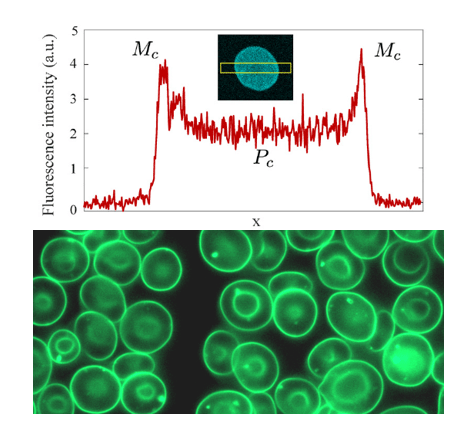
Stage M2 2027: How deformable is a red blood cell? Molecular rotors to probe cell mechanics in health and disease
Description To flow through the smallest capillaries, red blood cells must be highly deformable. In pathologies such as sickle cell anemia and spherocytosis, this ability is altered. Cell deformability is therefore a relevant parameter to diagnose and monitor these...
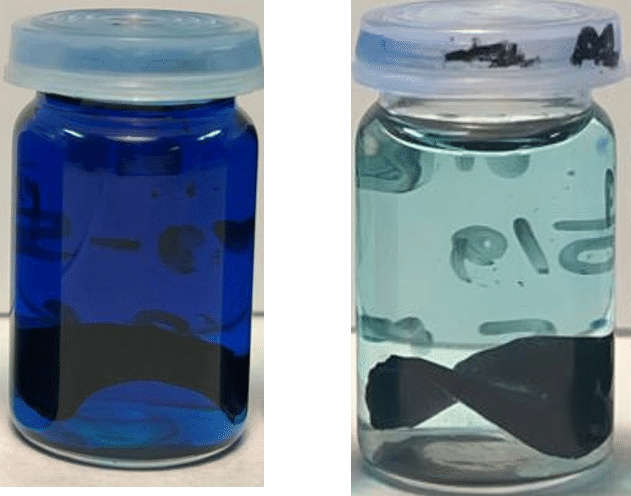
Stage M2 2027 : hydrogels et composites modulables pour une remédiation sélective et circulaire des métaux toxiques
Proposal for master internship Hydrogels et composites modulables pour une remédiation sélective et circulaire des métaux toxiques Avec les progrès de la technologie et de l'activité industrielle, la demande en eau pour l'usagequotidien augmente de jour en jour....
M2 internship 2027: Erosion by dissolution: hydrodynamics and pattern formation
Keywords: Macroscopic Physics, Fluid Mechanics, Geomorphology, Morphogenesis, Chemical Physics Internship location : Laboratoire MSC (Matière et Systèmes complexes). Université Paris Cité. Bâtiment Condorcet, Paris 75013. Starting date: first semester of 2027,...