
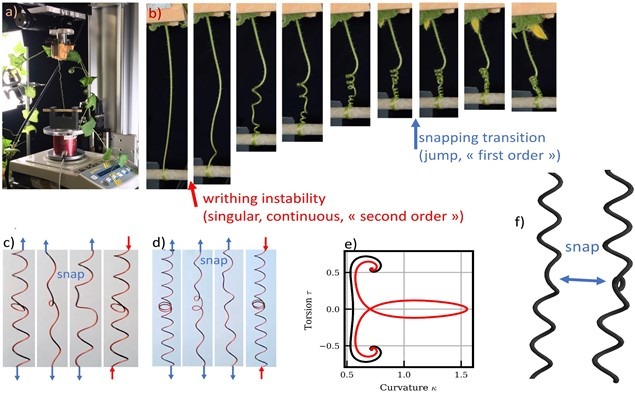
Our research includes, on the one hand, the biomechanics of organisms and filiform supramolecular structures with high sensitivity to environmental stimuli and, on the other hand, studies of bio-inspired artificial systems as well as combined devices between the living and the artificial. This project within the MSC laboratory is based on a new phenomenon recently published by our group [Dilly, 2023]. It is a “soft engine”, based on the inversion of a helix. In our research, we are (bio)inspired by climbing plants, by the flagella of microalgae, filamentous algae, or even by functional supramolecular structures like amyloid fibers. Then, we propose bionic devices, hybrids between living and artificial.
The student intern will mainly work on the experimental part within the MSC laboratory, both on living and synthetic systems with Dražen Zanchi on site and in collaboration with Julien Derr (Lab. Rep. Dev. Plantes, ENS, Lyon). From a thesis perspective, the theoretical part is in collaboration with Sébastien Neukirch (d’Alembert Institute for Mechanics, Paris).
Laboratory name: Laboratoire Matières et Systèmes Complexes (MSC)
CNRS identification code: UMR 7057
Internship director: Dražen ZANCHI
e-mail: drazen.zanchi@u-paris.fr Phone number: 06 78 95 47 25
Internship location: Laboratory MSC, Paris
Thesis possibility after internship: YES
Funding: YES If YES, which type of funding: ANR
À lire aussi
La caractérisation des polymères : une compétence clé pour innover efficacement
Les polymères occupent aujourd’hui une place centrale dans l’innovation scientifique et industrielle par leur capacité à relever des défis complexes. Pour concevoir de nouveaux matériaux performants et durables, il est toutefois indispensable de bien comprendre leurs...
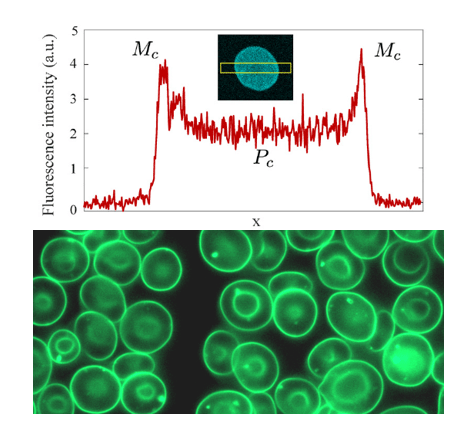
Stage M2 2027: How deformable is a red blood cell? Molecular rotors to probe cell mechanics in health and disease
Description To flow through the smallest capillaries, red blood cells must be highly deformable. In pathologies such as sickle cell anemia and spherocytosis, this ability is altered. Cell deformability is therefore a relevant parameter to diagnose and monitor these...
Stage M2 2027 : hydrogels et composites modulables pour une remédiation sélective et circulaire des métaux toxiques
Proposal for master internship Hydrogels et composites modulables pour une remédiation sélective et circulaire des métaux toxiques Avec les progrès de la technologie et de l'activité industrielle, la demande en eau pour l'usagequotidien augmente de jour en jour....
M2 internship 2027: Erosion by dissolution: hydrodynamics and pattern formation
Keywords: Macroscopic Physics, Fluid Mechanics, Geomorphology, Morphogenesis, Chemical Physics Internship location : Laboratoire MSC (Matière et Systèmes complexes). Université Paris Cité. Bâtiment Condorcet, Paris 75013. Starting date: first semester of 2027,...