


Interplay of mechanics, chemistry, and geometry in the physics of morphogenesis
Jean-Christophe Galas, Laboratoire Jean Perrin, CNRS, Sorbonne Université, Paris, France
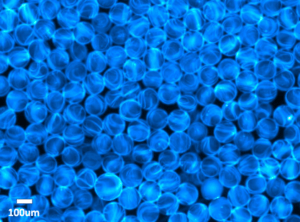
Our group investigates the physical principles underlying the emergence of order in living systems. To address this question, we adopt a bottom-up approach by engineering dissipative molecular systems capable of self-organization.
We use and develop two complementary experimental platforms. The first is a DNA–enzyme reaction–diffusion system that spontaneously generates spatiotemporal concentration patterns, including propagating biochemical fronts. The second is an active matter system composed of microtubules and molecular motors that self-organizes to produce mechanical stresses and large-scale hydrodynamic flows.
Beyond studying biochemical and mechanical processes independently, our goal is to understand how mechanics, chemistry, and geometry interact to generate robust spatiotemporal organization. The seminar will illustrate these ideas through two examples. The first oneconcerns transport emerging from the coupling of reaction–diffusion dynamics and advection in confined geometries. The second one addresses the self-organization of active matter under spherical confinement.
Self-organization of a microtubule/kinesin active matter under spherical confinement