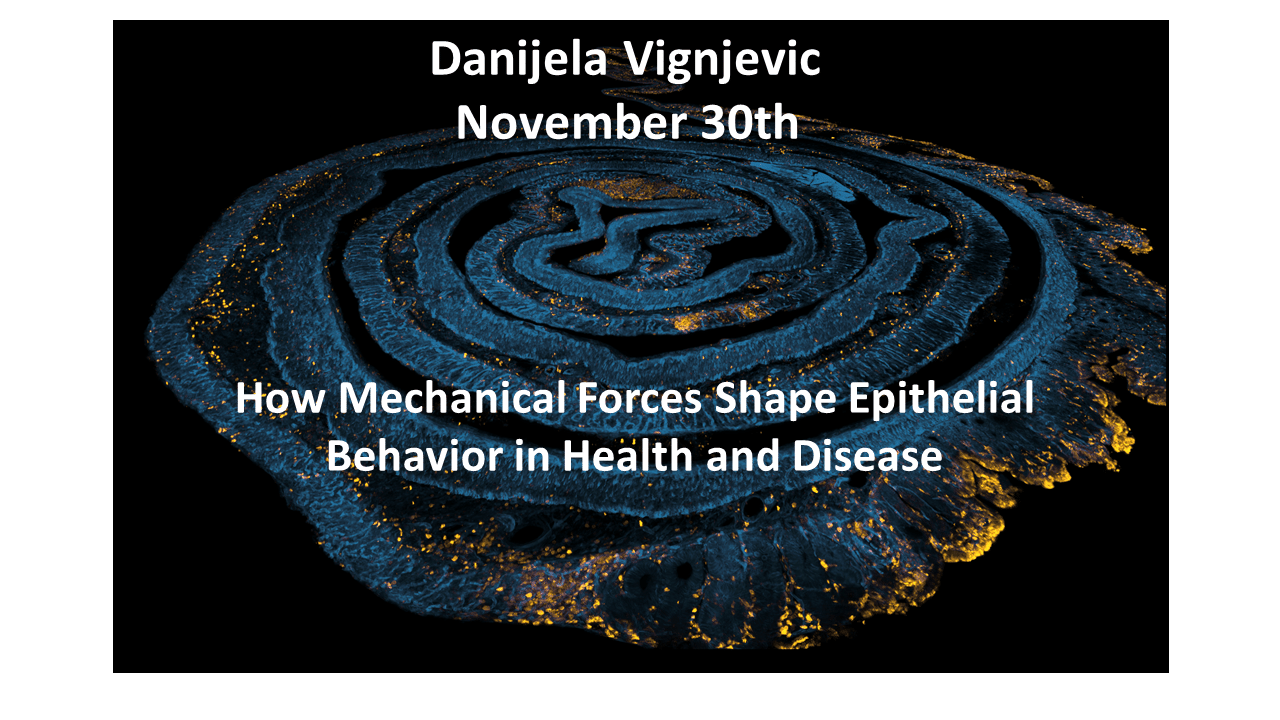
Mechanical forces play a fundamental role in shaping tissues and regulating cell behavior in both physiological and pathological conditions. We investigate how mechanical interactions between epithelial cells, fibroblasts, and the extracellular matrix control intestinal homeostasis, tissue repair, and colorectal cancer progression.
In the healthy intestine, we explore how epithelial cells adapt to mechanical challenges to preserve tissue architecture and barrier integrity. We investigate how basement membrane components regulate epithelial cell extrusion, how stromal contractility influences crypt organization and epithelial function, and how epithelial and stromal cells cooperate to maintain barrier resilience.
In colorectal cancer, we study how cancer-associated fibroblasts (CAFs) remodel the tumor microenvironment and generate mechanical forces that influence tumor growth, invasion, and response to therapy. We have shown that CAFs can organize into contractile structures that compress tumors, regulate cancer cell dissemination, and promote resistance to chemotherapy.